My Third Realm
Why Good Citizenship Requires More of Us

Democracy requires the active participation of its citizens. The form of government Donald Trump is trying to impose does not. If he succeeds during the remainder of his term, voting itself could become little more than a ritual. The opinions of the majority would no longer guide the government; they would simply become obstacles for those in power to overcome -- and they would possess the power to do exactly that.
If democracy is defeated by a single ruler taking power, supported by an oligarchic class of the ultra-wealthy, elected officials would cease to represent the people. We, the people, would become their inferiors rather than their sovereigns. Capitalism, too, would be transformed into a tool for increasing the wealth and power of the few instead of a proven freedom of enterprise for the enrichment of the whole economy.
Communism does not require citizen participation: voting is merely a charade. Post-communist, dictator-ruled Russia doesn’t follow the will of the people, but it has jail space for “dissidents.” Theocratic Iran does not require citizen participation; when young people stood in the streets against the government, thousands were gunned down, and that is the way they deal with opposition. China conducts elections, but the voter assumes the single ruling party will know how they vote, and that is sufficient for control. The Chinese government has the technology to follow every move of a citizen throughout each day.
In three months, votes will be cast. Americans are in imminent danger of becoming one of these kinds of societies. If Trump, holding all the levers of power, manages to steal the majority vote, none of us will have to worry about citizen participation. Consider what we will lose.
A candidate for the U.S. Senate in Texas, James Talarico, recently spoke to a group of young people and reported that he constantly hears them say that they do not plan to support either him or his opponent because, “I am not interested in politics.” His response to this attitude is: “You might not be interested in politics, but politics is interested in you.” Talarico then rattled off a few examples of issues that political engagement determines: wages, housing costs, rent controls, education, and healthcare.
I need to step back and acknowledge that many voters, probably about one-third, are going to be more inclined to focus on matters of business and cultural affairs than political affairs, and will require self-discipline to engage in the actions of good citizenship. I say this based on my assumption that each of us has different levels of interest regarding each of the three realms of society. There are those of us whose personal makeup is simply more inclined toward one realm than the other two: government and politics, cultural opportunities, or business. Normally, a person will have a first realm of interest that feels like a “natural interest,” a secondary realm of interest, and finally, a third realm in which they have far less interest.
I will use myself as an example. My interest in money and matters of finance is so weak that I have had to discipline myself to learn how to provide leadership for institutions of responsibility, including matters of investment. Because of my strong interest in government, I also disciplined myself to learn about the broader picture of economics. For example, I forced myself to work through the masterful work by Thomas Piketty, Capital In the Twenty-First Century. But it was all sheer labor. My first interest is culture, and my close second is governance and politics, reflecting my degrees in law and theology.
It may be that you, as an individual, really are not very interested in political governance as a matter of personal disposition. Even so, as I had to force myself to learn institutional finance, you have an obligation to the rest of us in our society and, for your personal benefit, to focus, vote, and influence our government. Many of you will have been turned off by the processes of politics and government, by the failures, and perhaps especially by the corruption. Granted, but it will be most surprising if the same categories of failure and abuse were blocking your interest and engagement in the two realms you more naturally respect and value. Your responsibility to us, your fellow Americans, is to participate in our government for the common good.
It is always wise to pay attention to Plato and Aristotle, and especially whenever they are in emphatic agreement. This is one of those insights. Aristotle’s formulation is the most famously employed when he claimed that the human being is a political animal. If we behave differently, we are a completely isolated outcast, or a beast, or a god. Politics (Book 1, Chapter 2).
While my daughter Katherine was working on an oral history of Common Cause, she and I had the opportunity to conduct what would be John Gardner’s last interview. To give you an idea of the respect and affection Gardner had earned throughout the nation, I can think of at least ten people who named their children after him.
Perhaps the single achievement for which he is best remembered nationally was his successful leadership in passing the breakthrough civil rights bills, especially the Voting Rights Act. He was largely responsible for passage of the bills that created “The Great Society” as head of the Department of Health, Education, and Welfare during LBJ’s administration. By the way, Gardner served in these roles as a Republican.
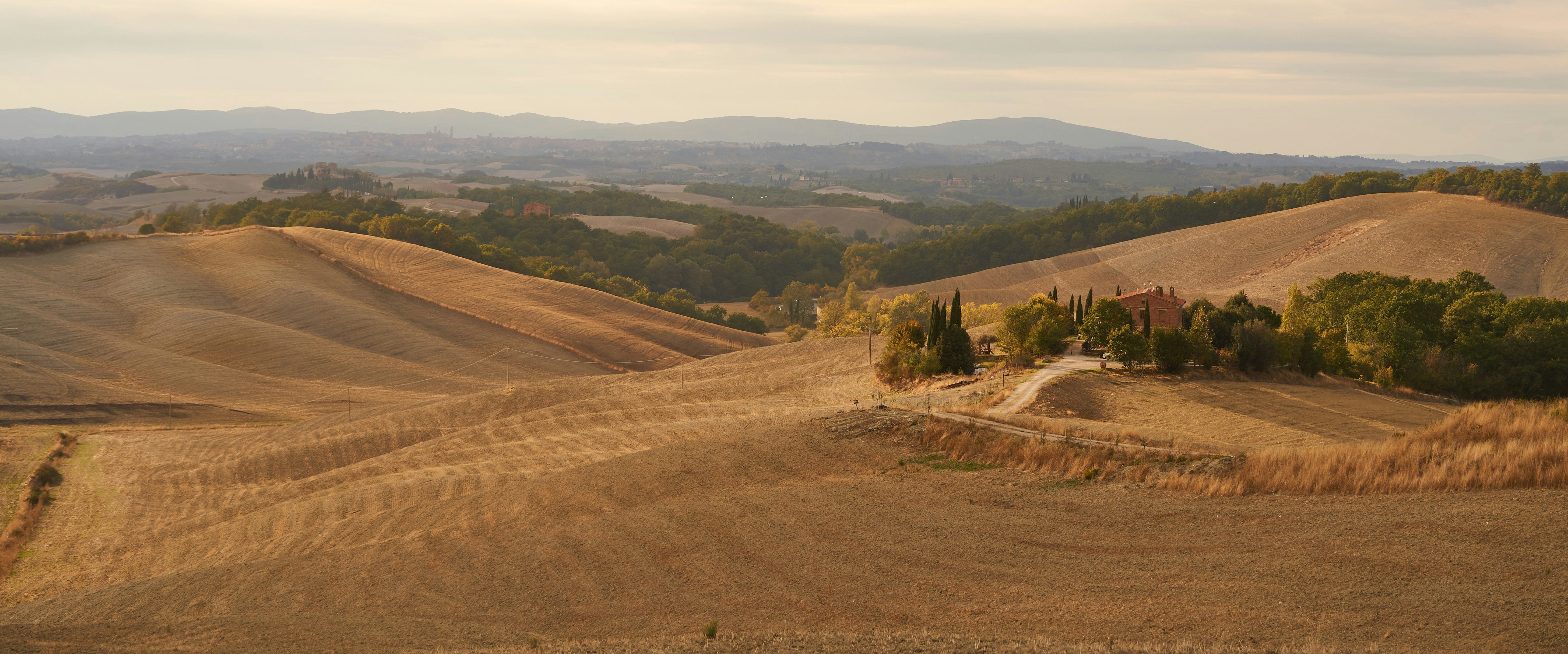
During our interview, Gardner related the turning point that changed the course of his life. As a WWII intelligence officer, Dr. Gardner found himself standing in deep contemplation on a hill in Italy. He looked out over a vista of natural beauty marred by military activity. “What,” he thought, “ever brought me to this? I am a PhD-trained psychologist and contented college professor at one of the great educational institutions. I have a clear and chosen career path laid out in front of me. I am a happy husband and father who misses my family terribly. But here I am, in the middle of a worldwide engagement on which everything in the future depends. A future I was once so sure of, but now a cause on which everyone’s future depends -- everyone in the whole world. We are all in it together, one way or the other.”
At that point, Gardner said that he realized the inescapable importance of politics and government action. Political decisions and events in faraway lands that had nothing to do with him personally and over which he felt no influence had jerked him away from everything and everyone to fight in a war in the middle of Europe. He decided at that moment that he had the responsibility to engage with the needs of the world through the opportunities and necessities of politics.
And so, he did.
Not just handwriting on the wall— sometimes it’s portraits. In my childhood flat, my father (term used advisedly) hung photographs of HST, FDR, Adlai Stevenson, and Alban Barkley. Decorating with Democrats. It mattered. It still does!