The Conversation with Julius Tomin Continues
Sitting in a Small Apartment, Trying to Understand the World

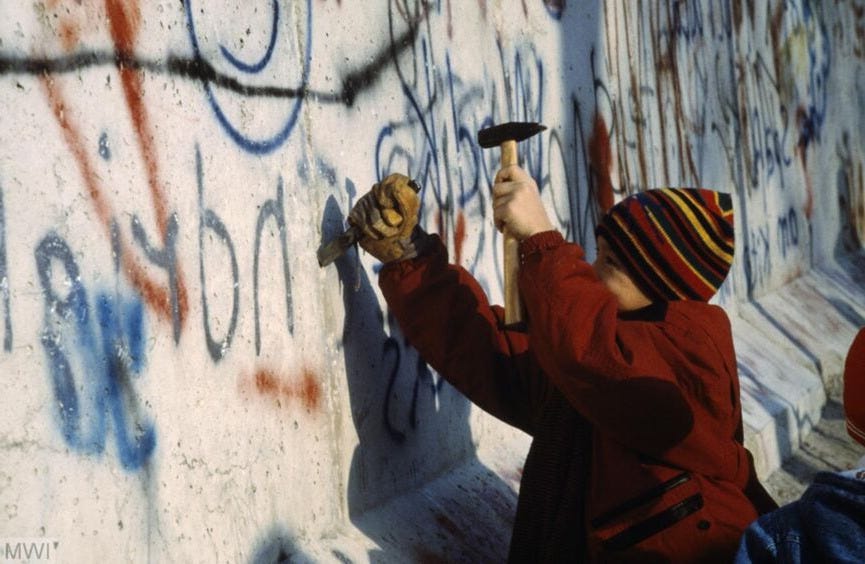
Part Two of my conversation with Julius Tomin in 1969. Julius Tomin, a young professor of Marxist philosophy at Charles University, had emerged as a major speaker in the dialogue on the side of Marxism, against Soviet communism, and in favor of the Prague Spring. I was in Prague investigating the Marxist-Christian dialogue that had emerged in Czechoslovakia the previous year. In Tomin’s small apartment, we chatted for hours on the topic.
“Can you have democratic Marxism? Is that possible?”
I jumped in with that pressing thought. “I need to understand more clearly why a Marxist, arguing against Christianity, would accept and even celebrate the Dubček government of democratic socialism. I am sure you will correct me, but I confess to some confusion here.”
Julius smiled. “Dubček’s government embodied our attempts to humanize Marxism, reconcile it with Christian ethical traditions, and abandon Stalinist repression.”
“Fascinating!”
Julius resumed, “We have been focused on Marxism, but now it is your turn. Explain capitalistic democracy.”
“I’ll be thinking this through as I go. Let’s start simply by taking the kinds of differentiated tasks needed in any human society. What vocations are chosen by people if the choices are actually enough available to everyone?”
Julius answered, “Speaking generally, there are people whose talents and proclivities move them to choose participation in economic endeavors—somewhere within the wide range of them.”
He continued, “There are others who choose to move into the arts, or education, or religion and so forth. These sorts of vocations make contributions to culture.
“Others participate in decision-making for the society: politics and government. In various ways and different stages, people are placed in positions of authority, work in institutions that perform the tasks of government, operate within institutions created by government, and so forth.”
Continuing this thread, I responded, “You catch my drift, right? At first, there are three fields of work, each of which requires leaders and workers at different levels. One: political governance. Two: culture. Three: economy. These are the three realms of a society according to most sociologists. The workers and their families define the categories that make up the distinctions of society. All three are equally needed and are necessary for a healthy society.
“Here’s the key. Both the realms and those working within need to work together, must work together, and live together in a certain balance. The more successful this is, the more justice there is in society. They can be a bit competitive, but they must cooperate in a balance in which the people engaged in each are satisfied and feel equal in terms of the kind of work, income, standing, and privilege. In other words, their value. I see you thinking way ahead of me.”
Julius frowned and then smiled again. “I think I see your picture for democracy, in comparison to the Soviet communism. I am not going to yield and say Marxism but only accept the accusation against that particular form of it. The three fields or, as you put them, realms, collapse in the Soviet Union into the singular realm of government—a dictatorial one.”
“Wow. You are fast! Go, Julius.”
“We talked about Solzhenitsyn. He has been absolutely repressed. His books are only read underground, smuggled among Russians as well as out of the USSR. His story points to only one way in which culture is absolutely controlled by the government, all of which is limited to what the dictatorship likes. Culture was completely under the thumb, and not anywhere near what had been coming out of the Russian soul before. Religion was just extinguished. The threat of Solzhenitsyn was his deep faith as well as his literature.
“Is it necessary to say how the government controlled the economy? I am thinking of Russian farming, once the heart and soul of the people, living good lives doing what they loved. Then came mass production on cooperatives which had too little to do with the humanity of the farmer and family life. Of course, the Five-Year Plans were as controlled as government can be. The oligarchs emerged naturally enough without the benefit or trouble of capitalism.
“Of course, the government took everything into control and that was at pinpoint: all in one man and no more.
“Now Joe, let’s look at democratic, capitalist America. Building an empire, yes or no?”
I answered, “We will have to be overthrown or changed so radically that we are not the same nation. The bottom-line American ideal is equality. Is this not impossible in an empire?”
“I have been there,” Julius responded. “I see the United States coming under the threat of losing its ideals. I hope not, most honestly. The world needs the ideals of America. We need to see it in action. Yet, I have seen the racism, witnessed the nasty war in support of colonialism shown nightly on the TV, the violence on the streets, the assassinations of its greatest leaders. On and on is evidence of decline, perhaps decay. Especially, I think, the disagreement on the streets about Vietnam is crucial—an urge following war victories to expand into post-colonial empire.”
I replied, “Yes, that is scary, a fear I share more than I may be indicating. You cannot know how personally I suffer over the racism of the South, my home turf. We have deep-seated problems to overcome, established from the beginning. There are plenty of new difficulties forming. But we are making real progress. The civil rights struggle has produced a series of civil rights legislative decisions that have set the stage for us to ‘overcome.’
“We have passed laws allowing more immigrants from all over the world, including nations of Black people and those of color, such as from Asia. This is going to enhance our country enormously, just taking into account food and music.
“We have made advances in medical care and the war on poverty. We can point to many signs of dealing with our problems and of becoming more mature.
“I will tell you one of the things that I find most telling. The increase in the middle class means that fewer and fewer people are living below it. If we continue the progress, a great number of poor and oppressed should be rising out of poverty.
At a personal level, I can share something of what the rising middle class has meant to me and my working-class family. We were right at the bottom of that middle class but caught it on the rise. My sister and I felt then as if we lived like kings and queens. Wanting for nothing, feeling no difference from the wealthiest kids in school right through high school and college. There is no reason this pattern for workers and their families should not continue.”
Julius’s wife and children, excited to explain the school project, entered the room. She declared, “Dinner is ready.”
After dinner, we continued our conversation well into the night. Neither of us could predict that it would take 20 years for Czechoslovakia to be free of Soviet domination. Nor could I imagine that in a mere two decades, America would jump the track toward the slow train wreck of authoritarianism.
Your tripartite division of labor deserves further discussion.
You seem to have a knack for landing in intellectuals' apartments at times of world-historical importance. I'll always remember the day we went for tea with Jürgen Moltmann the day after the Brexit vote! Another one for the Substack one day maybe.