In a Voice We Cannot Ignore
The Inherent Violence of Racism

Racism is deeply embedded in American life and constantly shaping all aspects of it. Its destructiveness should be viewed from the bottom up to help us see it more clearly for what it is. This perspective will help us continue examining the path to Trumpism.
Extensive physiological and psychological studies were conducted on those engaged in World War II -- the first time such research was undertaken by psychological and psychiatric professionals and the first time they were conducted for both sides of a conflict. Subsequent studies followed during and after military conflicts of the twentieth and twenty-first centuries. One of the definitive conclusions of the studies was that people possess a strong innate inhibition against killing another human being, even after rigorous training and intense motivation. Yet the studies also noted that soldiers at war found it much easier to kill a person of another race.
White mobs killed more than 4,400 Americans in lynchings after the end of Reconstruction, between 1877 and 1950. Most occurred in the southeastern United States, especially in the states of the former Confederacy.
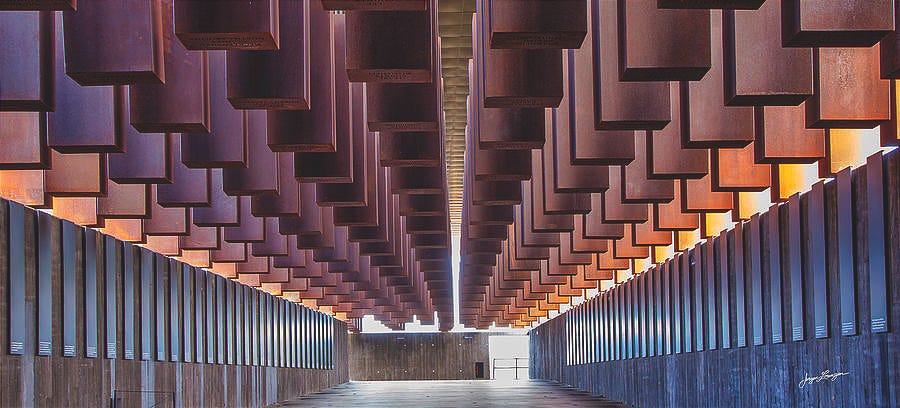
In Montgomery, Alabama, the National Memorial for Peace and Justice is located near a site of a former slave marketing block where slaves were sold. The memorial stands strikingly apart from modern downtown Montgomery. It is not a structure of beauty, nor does it contain anything intended to beautify the past; some have called it the “Lynching Memorial.” The memorial includes columns representing lynchings in each of the states that fought in the Civil War, as well as in states that were added during the westward expansion afterward.
This open-air structure offers little to see from a distance but row upon row of log-like objects hanging as though from trees. When viewed from beneath them, each is revealed to be a steel plinth etched with the names of men, women, and children who were lynched, burned alive, drowned, beaten to death, or shot -- killed in varied and often grotesquely inventive forms of suffering and humiliation.
Each county across the country is represented by a plinth listing the names of the people lynched there. Visitors can walk beneath the plinths and, looking up, read the names and the county where each person was murdered. This memorial exists to help the human imagination grasp something of the raw horror. People walk quietly around the memorial, looking up at the names and speaking in muted tones that approach reverence.
These hanging columns stand above the living as stark and unsettling reminders of how ordinary people can become dangerous beasts when driven by racial hatred, turning on fellow human beings to inflict horrendous pain until no life remains. This discrimination is based solely on certain physical features, not on any differences in emotional, spiritual, or mental makeup. Its victims sang, laughed, and cried like anyone else, capable of profound feeling. And when hanged from a tree, they emptied their bowels like anyone else at the point of death.
In a voice we cannot ignore, this memorial reminds us that ordinary people can harbor racist feelings. We want to deny that racism exists in people we know, care about, admire, enjoy -- people we feel we can never reject. Nevertheless, we cannot dismiss racism as something casual or “normal,” nor can we honestly deny our role in enabling it.
When I visited the memorial, I found numerous people who had been killed in areas I know well. A few had dates beside their names, and I realized that lynchings were occurring while I was alive. I even found a town in Louisiana bearing my surname: Doss, Louisiana. Someone had been lynched there. That little town is gone now -- but I remain, and so does racial hatred.
Moving along the pathway of the memorial, people walk slowly, and I become lost in thoughts about how, every so often, when someone fixes on a name, enough of the concrete reality penetrates the imagination to evoke a sense of the outrageous: the name etched in the plinth belonged to a real human being, a person who had thoughts, hopes, dreams, and loves -- just like me. Like me.
White citizens often participated in these murders as a form of entertainment. Parents sometimes brought their children with them to watch and learn. Photographs and postcards were kept as souvenirs of the events. In Without Sanctuary: Lynching Photography in America, author James Allen writes:
The men and women who tortured, dismembered, and murdered in this fashion understood perfectly well what they were doing and thought of themselves as perfectly normal human beings. Few had any ethical qualms about their actions. This was not the outburst of crazed men or uncontrolled barbarians but the triumph of a belief system that defined one people as less human than another.
I recall a moment from my childhood that has stayed with me. My sister and I were walking home from the Sunday evening choir practice and youth group. I asked, “Do Negroes have souls?” After a few steps, I added, “This morning my Sunday School teacher said they didn’t. He used a lot of verses.”
“Do you remember,” she responded, “at Vacation Bible School this summer, how we liked the song about Jesus loving all the children?” Then she started to sing softly: “All the children of the world, red and yellow, black and white, they are all precious in His sight. Jesus loves the little children of the world.”
Joe, I am so very sorry you had that experience as a child, an upbringing that left you questioning "If Negroes had a soul?'. Being brought up in Palo Alto in the 1940's my experience with racism had more to do with Japanese and Asians, although East PA apparently was more Black, however, my parents never spoke of non-white people as though they were less meaningfully human than whites, just perhaps that they "looked different" but never that their needs were different from ours. When the government sent Japanese people to concentration camps my father tried to get the ones who worked for us, and their children, able to live with us instead, but the authorities refused and sent them away, including the children, for the duration of the war. Anna
How old were you when you asked that question, Dad? So painful. Sunday school!