The Middle Class
A Shrinking Minority

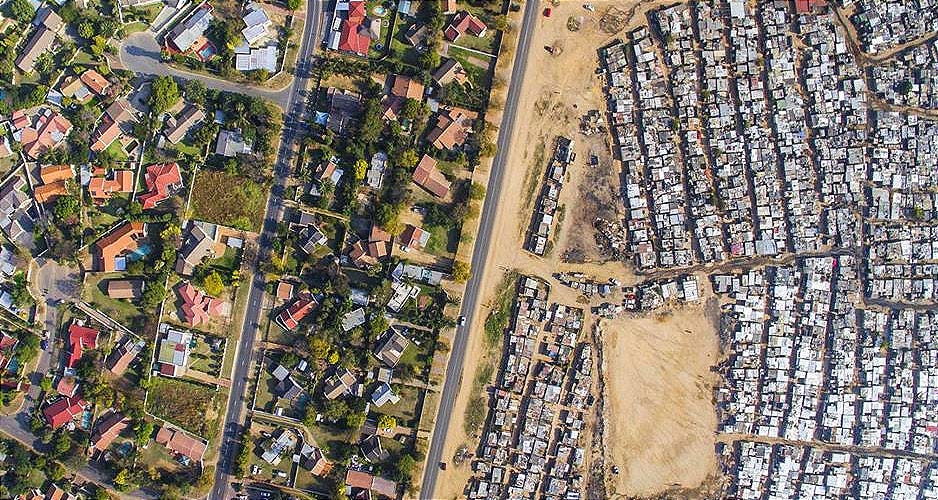
This begins a series of posts examining the economy as Brick 2 on the Yellow Brick Road to Trumpism.
Like every nation, the United States depends on a strong middle class. Ask the French about losing theirs—a central cause of the French Revolution. Ask the Spanish, English, and Dutch about the consequences of a weakened middle class as each, in turn, lost its position as the world’s leading economic power. The size and thus the strength of the American middle class have been a significant factor in the nation’s fall from economic dominance and leadership over the last ten years.
We must not allow future historians to cite the demise of the middle class as a cause of a “Trumpist Revolution.” Setting aside the noble aims of offering the assets of America’s strength in service of global leadership, consider instead only the misery and consternation of those pushed out of the middle class, along with the economic and cultural loss of those unable to break into its security and enjoyment.
Ronald Reagan came into office at just the right moment to deregulate and expand the role of business, elevating the techno-bureau-economic realm to a dominant position in American society. His primary claim in accomplishing this was to reduce the size and importance of the federal government, which he saw as standing in the way of economic expansion. In practice, however, his administration and every Republican administration that followed dramatically increased the size of government. What they did succeed in reducing, dramatically, was the size of the middle class.
“Reaganomics,” as the economic policies of the Reagan administration came to be known, formed the heart and soul of a Republican Party that steadily reduced its political range into an exclusively conservative identity. In the ever-expanding imbalance caused by the erosion of the nation’s middle class, Reagan-era policies laid the first bricks on the path to Trumpism, and few since have contributed more directly to its rise.
The 1980 election was widely viewed as a mandate to restore power to wealth-driven elites. To accomplish this goal, the Republican Party—newly self-defined as the conservative party—pursued policies that diminished the vitality of the middle class. Party leaders sensed that the country was ready to reverse the Square Deal of the first President Roosevelt and the New Deal of the second. Reagan’s administration succeeded, and the middle class began a two-generational decline.
America’s founders were deeply concerned with establishing a government capable of fostering and maintaining a thriving middle class. They were determined to prevent the rise of an aristocracy—a small group of wealthy individuals and their heirs—capable of dominating the nation. The revolt against England’s system of such domination had succeeded. As Jefferson warned, “it is both our right and our responsibility” to prevent “overgrown wealth” from becoming “dangerous to the state.”
The middle class has repeatedly been threatened, and at times suppressed, throughout the nation’s history. It has been constantly under threat, but the industrialized Gilded Age following the Civil War looms largest in our collective memory. In response, Republican and Democratic leaders stepped forward to restore and expand the middle class. The Progressive Era, however, was too short. After World War I, old forces roared in the 1920s and were largely responsible for the Great Depression that followed the market crash and the misguided policy reactions to it. (Given the dangers today posed by Trump’s economic proposals, it is important to remember the disastrous results of the tariff policies in the early 1930s.) Over the following decades, Franklin Roosevelt, Dwight Eisenhower, John Kennedy, and Lyndon Johnson established critical protections for the middle class, including antitrust regulations, Social Security, a minimum wage, fair labor laws, a war on poverty, and Medicare. It was the renewed strength of the middle class that made these examples effective in promoting national welfare.
When FDR took office during the Great Depression, the American middle class composed only about 10% of the population. It is easy to forget how impoverished most Americans were at that time. By the time Reagan came into office five decades later, the middle class had grown sharply to 67% of the population. However, under his drastic changes in policy, it began to drop precipitously. By 2025, the middle class had fallen by more than a quarter, to roughly 45% of the population—a conservative figure in contrast to several others, some as low as 41%. Viewed from another perspective, a February 2025 report from RAND, a nonprofit, nonpartisan research organization with a reputation for objectivity, highlighted in a careful study the incredible impact of Reaganomics. According to their analysis, had the policies and system in place before 1975 continued, the bottom 90% of Americans in 2023 would have collectively held almost $80 trillion more. Where do you think that money went?
It requires little imagination to see what Reaganomics has meant for Americans forced to readjust their way of life after being squeezed out of the middle class, as well as for those seeking to achieve the American promise of upward social mobility. In no small measure due to a weakened middle class, a small but rapidly growing segment of the population moved into positions of political dominance. What the founders dreaded began to take shape: the wealthy elite became the most politically powerful and socially respected Americans, entrenched and evolving into an American form of aristocracy.
The background for this lies in the enduring assumption, reaching back to the first centuries of civilization, that pyramidal societies are necessary. This is an assumption rather than a myth, because a myth cannot be proved. As I have repeatedly argued in Democracy or Empire, a myth may be true or false, but its truth cannot be determined with factual confidence. We can believe a myth with more commitment and confidence than we do scientific facts, yet it is a matter of belief that is ultimately unverifiable.
The Declaration of Independence asserts that all people are created equal, but this is a myth, despite the democratic belief in it and commitment to it. It cannot be proved with the certainty of science. By contrast, the contention that human society is naturally and unavoidably arranged according to the principles of early civilization—a class system in which the role of government is controlled by an elite based on wealth, breeding, and education—can be shown to be false as it is less effective and more debilitating to the overall benefit and health of society.
After decades of programs and policies since Reagan, the data is clear: even with a modicum of objectivity, one must admit that the assumption that pyramidal societies are necessary is false. It is impossible to believe that the nation that first established democracy and helped spread it across the world would willingly return to a pyramidal, pagan society in which the few at the top prosper while the vast majority languish at subsistence level.
Trumpism is precisely that threat. Restoring the middle class is essential to reestablishing the strength of American society.
Ideas like these are best explored together. Share your thoughts! I read and respond to every comment.
Amen!
What a valuable analysis, Joe! Thanks.